



Blog
Understanding coastal flood risk: Can sea walls really protect us?


Blog
Flooding is one of the UK’s most pressing infrastructure challenges. Rising sea levels, increased storm intensity and ongoing pressure on drainage systems are forcing the industry to rethink how flood resilience is planned, delivered and maintained.
Sea walls remain a critical and highly visible part of coastal defence. However, they are not a complete solution. To deliver effective, long-term protection, it is essential to understand both the nature of flood risk and the role that different stakeholders play in managing it.
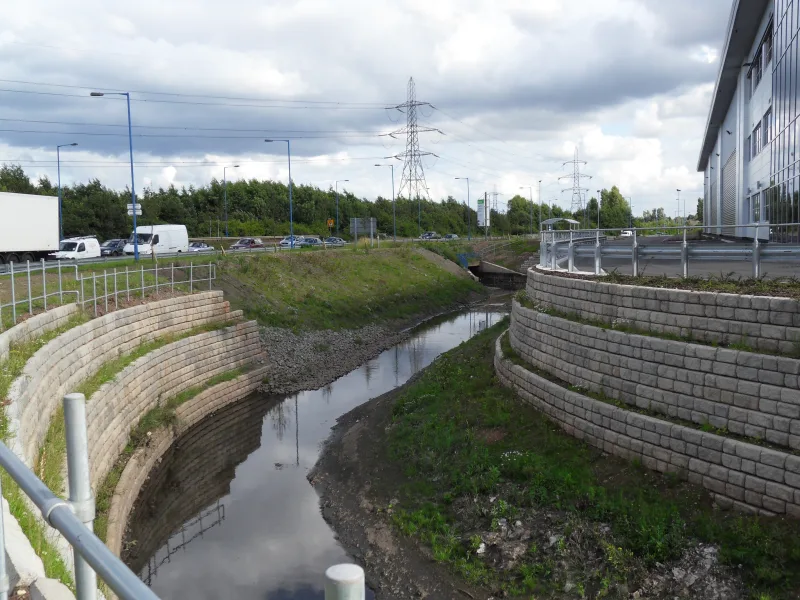
Flood risk is no longer confined to coastal or riverside locations. Increasingly, surface water flooding and extreme rainfall events are affecting a much broader range of environments, including urban and heavily developed areas.
This shift means that understanding flood risk must go beyond simple location-based assumptions. It requires a more detailed appreciation of how water behaves across a site or catchment, how that behaviour may change over time, and how different sources of flooding can interact. Without this foundation, even well-intentioned solutions risk being under-designed, incorrectly applied or unable to perform under pressure.
Sea walls play an important role in protecting coastlines from wave action, storm surges and erosion. In high-risk locations, they often form the first line of defence, safeguarding infrastructure, communities and commercial assets from direct coastal impact.
However, their effectiveness has limits. While they can reduce the likelihood of flooding, they do not eliminate it entirely. Extreme weather events can still result in overtopping or structural stress, and the long-term performance of any sea wall depends heavily on consistent maintenance and monitoring. In addition, sea walls do not address inland or surface water flooding, and in some cases can alter natural coastal processes in ways that create challenges elsewhere.
As a result, sea walls should be understood not as a standalone solution, but as one component within a wider, integrated flood management strategy.
For designers and asset owners the focus must be on creating solutions that remain effective long into the future. Flood risk is evolving rapidly, driven by climate change and increased development pressure, and this demands a shift away from short-term or single-issue design thinking.
Designing for resilience begins with anticipating how conditions may change over the lifespan of an asset. This includes factoring in more frequent and severe storm events, rising sea levels and the cumulative impact of development on drainage capacity. Solutions must therefore be adaptable, capable of performing under a range of scenarios rather than a fixed set of assumptions.
Equally important is the integration of systems. Coastal defences such as sea walls need to work in tandem with surface water drainage, retaining structures and, where appropriate, nature-based interventions. When these elements are considered in isolation, gaps in protection can emerge. When they are planned as part of a coordinated system, overall performance improves significantly.
There is also a growing need to balance technical performance with practical delivery. Specifications must take account of constructability, material availability and long-term maintenance requirements, ensuring that what is designed can be delivered efficiently and maintained sustainably over time. Recognising and planning for residual risk is a key part of this process, as even the most robust systems cannot guarantee complete protection.
For engineers, merchants, or specifiers, the challenge lies in translating design intent into reliable, real-world performance. Flood resilience is not achieved through individual components alone, but through the way those components are installed, connected and coordinated on site.
A clear understanding of the wider system is essential. Sea walls, drainage elements and associated infrastructure must function together, which means installation teams need to appreciate not just what they are building, but why it has been designed in a particular way. Attention to detail is critical, as small deviations during installation can have disproportionate effects on long-term performance.
Site conditions add further complexity. Coastal and flood defence projects often involve difficult ground conditions, constrained working environments and demanding programme requirements. In these contexts, the choice of materials and systems can make a significant difference, not only in terms of durability but also ease and speed of installation.
Merchants also play an important supporting role, ensuring that the correct products are available when needed and that substitutions or changes do not inadvertently compromise system performance. Across all roles, a focus on quality and consistency helps to reduce future maintenance issues, minimise failure risk and deliver outcomes that align with the original design intent.
A consistent challenge across flood management projects is the gap that can emerge between what is designed and what is ultimately delivered. This is rarely the result of a single issue, but rather a combination of misalignment in priorities, communication gaps and practical constraints.
Closing this gap requires stronger collaboration across the entire project lifecycle. Designers need to consider how their solutions will be built and maintained, while contractors and installers must engage with the reasoning behind specifications. Merchants and suppliers, meanwhile, play a key role in maintaining continuity between design and construction by supporting accurate product selection and availability.
When these roles are aligned, the result is not only a smoother delivery process but a more resilient and reliable end solution.
Sea walls remain a vital element of coastal defence, providing essential protection against erosion and storm-driven flooding. However, their role should always be considered within the broader context of flood risk management.
For designers and asset owners, the priority is to develop integrated, future-ready strategies that address multiple sources of risk and account for long-term change. For contractors, groundworkers and merchants, success lies in delivering those strategies with accuracy, coordination and attention to detail.
Ultimately, effective flood resilience depends on a shared understanding of risk and a collective commitment to delivering solutions that perform not just today, but for decades to come.
Written By

With 20 years’ experience across infrastructure and highway engineering, Pete Tamblin has delivered projects ranging from small housing developments to complex, multi‑million‑pound schemes.