



Blog
The future of flooding and how it may affect waterside cities


Blog
In October 2024, catastrophic flooding in Spain's Valencia region claimed more than 220 lives and caused billions of euros of damage. The scale of the disaster prompted one of Europe's largest flood recovery programmes, with billions of euros invested not only in rebuilding communities but improving resilience to future extreme weather events.
This was followed in 2025 by major floods across Europe, North America, Africa and Asia. In the UK alone, the Environment Agency issued more than 130 flood warnings just in January. Flooding in Nigeria killed over 150 people in May, while monsoons that began the following month in Pakistan resulted in more than 900 lives lost and 2 million people displaced. And in November, more than 1,400 people died in south-east Asia as Cyclone Ditwah brought torrential rains and flooding. Sri Lanka’s president described this as the “largest and most challenging natural disaster in our history”.
As climate change continues to influence weather patterns around the world, cities are increasingly being challenged to rethink how they live with water.
The challenges highlighted by the floods in Valencia and elsewhere are not unique. The World Economic Forum (WEF) has identified 11 “sinking cities” that are especially vulnerable to rising sea levels. They range from Rotterdam in the Netherlands to New Orleans in the USA, as well as other major tourist destinations such as Miami, Bangkok, and Venice.
Many of the world's most iconic waterside cities are already exploring how they can protect communities, infrastructure and local economies from increasing flood risk. Here at Marshalls, we’ve studied five famous tourist spots around the world, looking at the impact that flooding could have and which preventative measures planners have installed.
Osaka
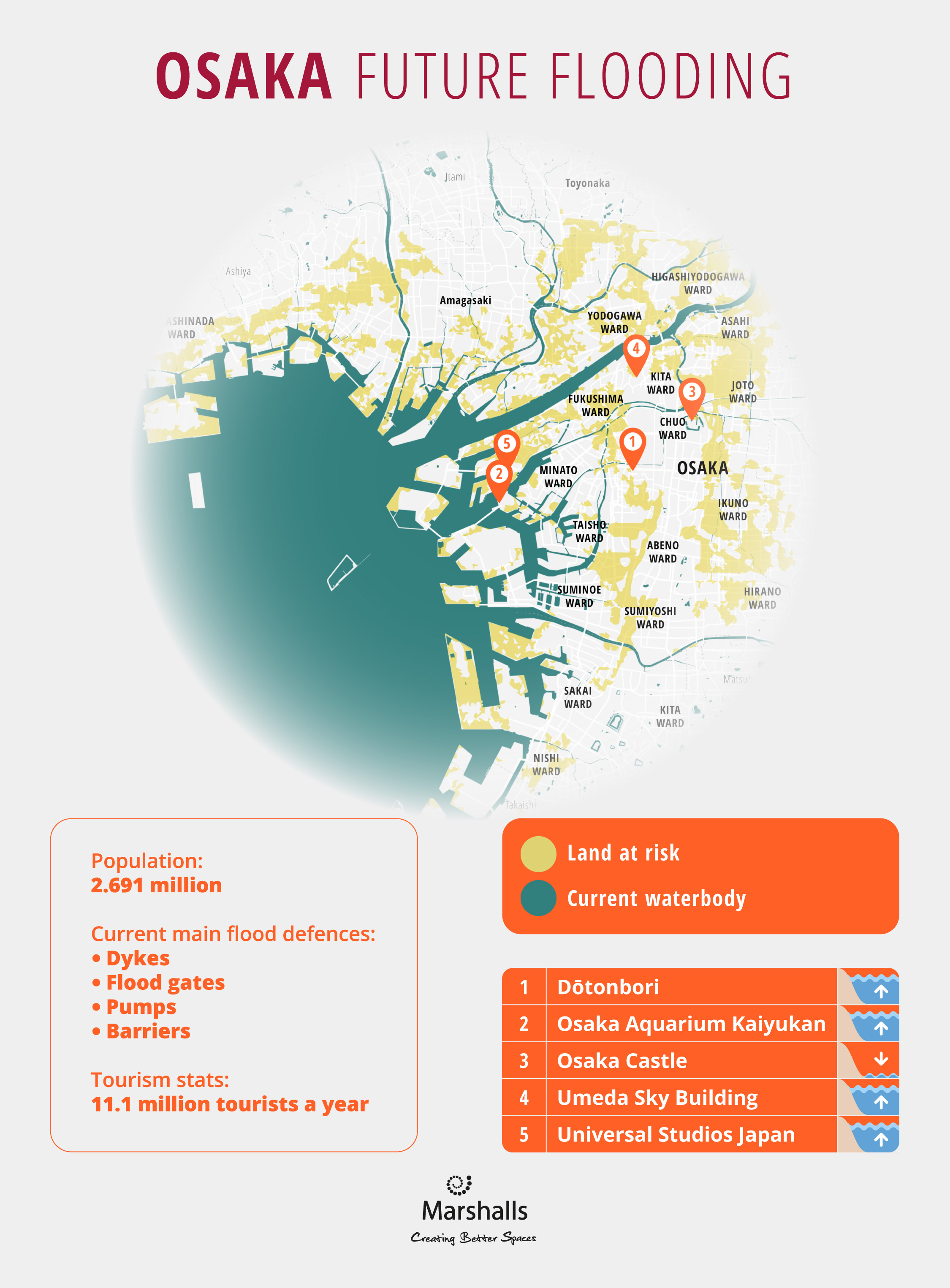
As part of a country prone to being hit by typhoons, Osaka has implemented several flood prevention methods, including dykes, gates, pumps and barriers, which help to divert water away from the subway and any areas of paving at ground level. The city receives over 14 million tourists per year, with attractions such as Universal Studios Japan, Kuchu Teien Observatory and the Dōtonbori district all susceptible to floods.
And Professor Yoshiaki Kawata from Kansai University, who has been reviewing the risks to Osaka using computer simulations, believes modifications need to be made in order to counter the rise in sea levels. “In Osaka Bay, the design height of the flood defences is based on the water level at low tide, plus 2.2 metres to allow for spring high tide and 3 metres for a storm surge,” he said. “Due to global warming, we have to change the storm surge model.” He added: “Traditionally, the Japanese government proposed to reduce flood risk across a total area, not at particular points. This situation is now impossible.”
Alexandria
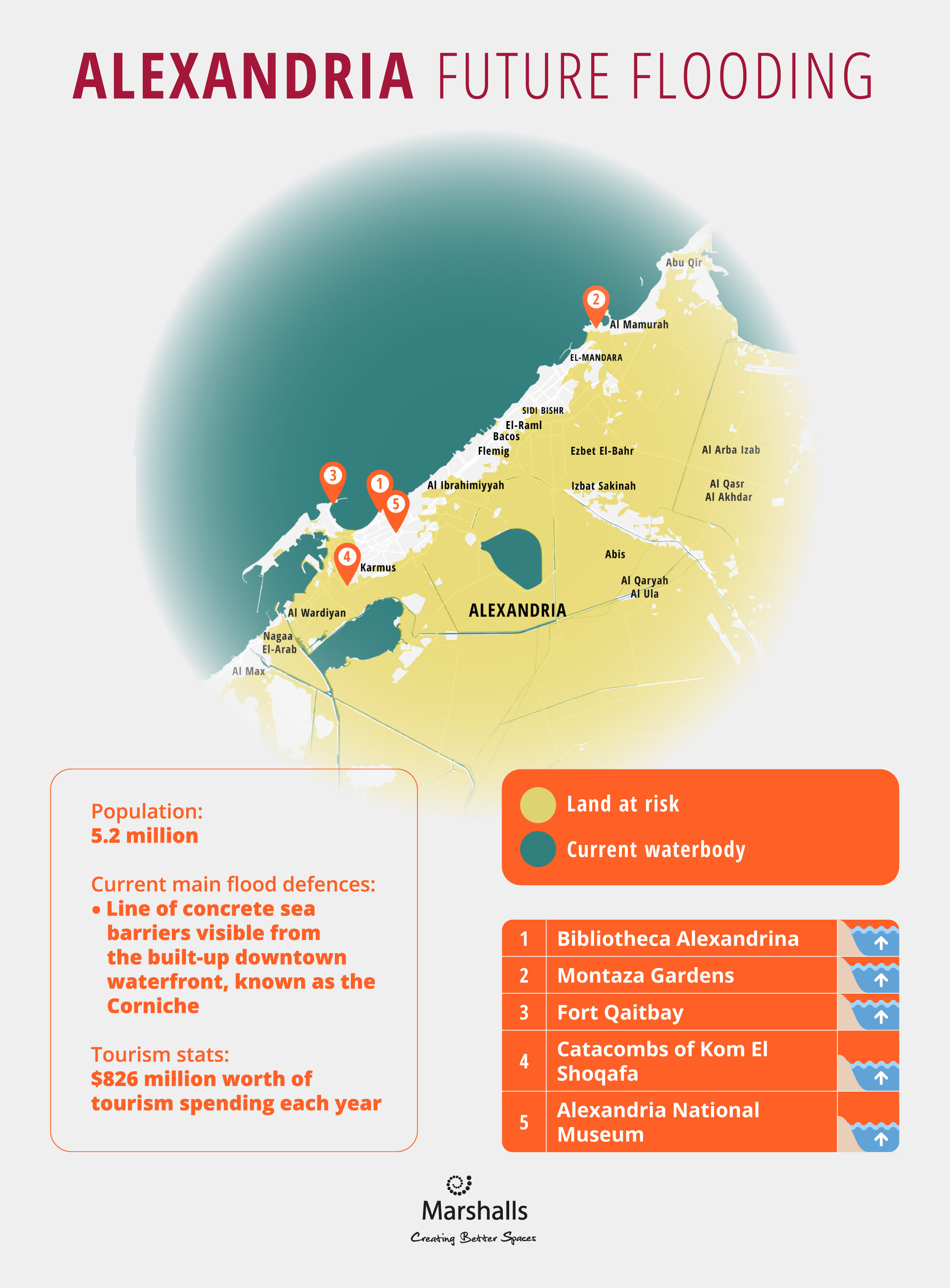
On the northern coast of Egypt, Alexandria has a population of 5.5 million and is one of the country’s most important cultural destinations and industrial hubs. It is also one of WEF’s 11 sinking cities. Alexandria is situated on the Nile Delta, which itself is sinking due to rising sea levels, providing planners with a major headache when it comes to successfully defending against widespread floods.
Historic sites such as Montaza Palace, the National Museum and the Catacombs of Kom El Shoqafa are all vulnerable to flooding, and damage to any of these attractions could have a significant impact on Alexandria’s tourism industry. As a first line of defence, the city constructed a series of concrete sea barriers along the waterfront, which protect the Corniche and other shore-side buildings. Without these barricades, damages could mount up to a cost of almost $25bn, says Ashour Abdel-Karim, head of the Egyptian General Authority for Shores Protection.
Shanghai
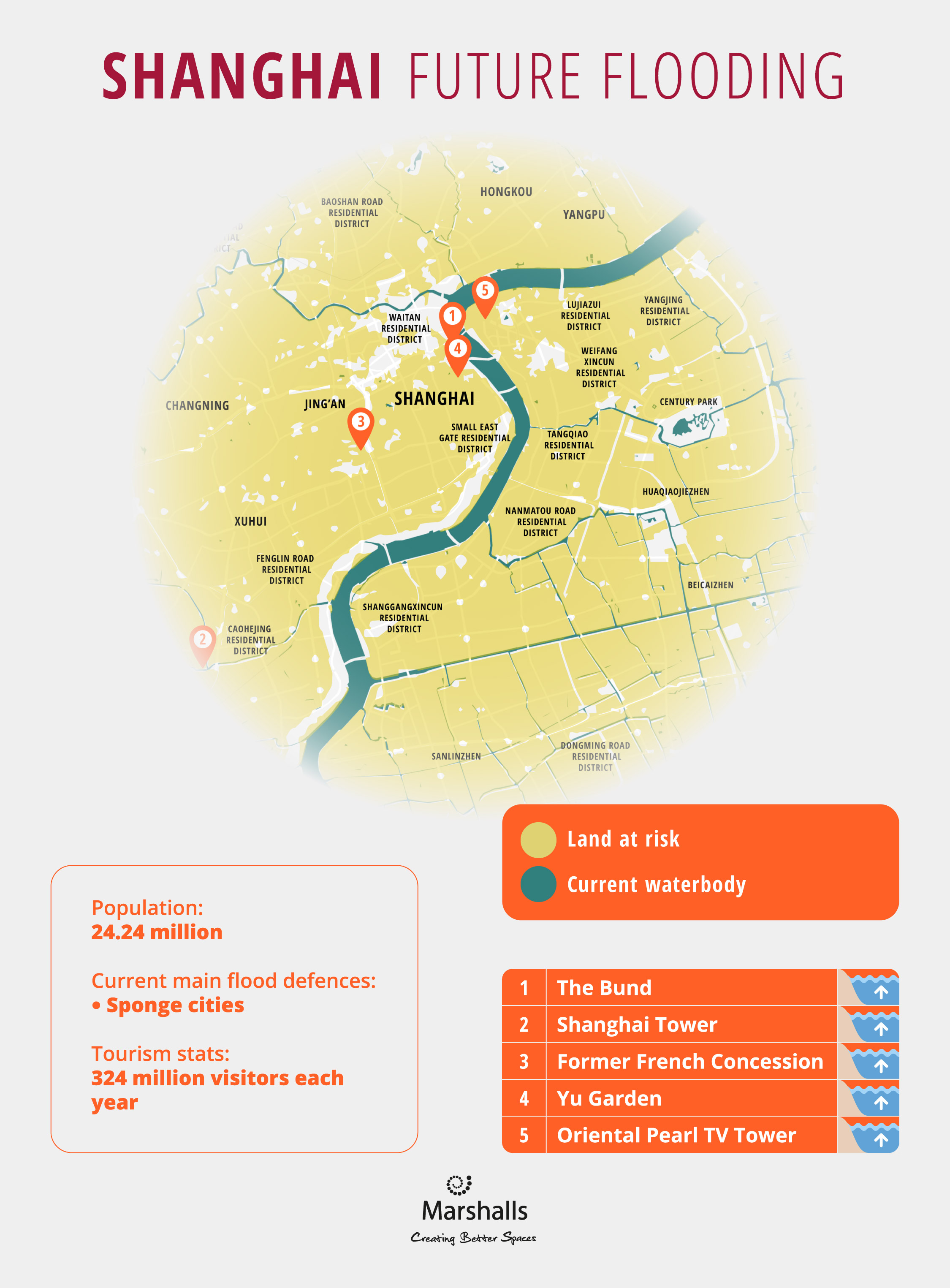
With more than 24 million people residing in this city on the east coast of China, Shanghai has come up with perhaps the most innovative and eco-friendly flood management system. In the likes of the Nanhui (formerly Lingang) district, large areas are covered with grass, trees and flower beds, allowing any surface water to be absorbed back into the earth and drain away naturally. These measures form part of Shanghai's wider "Sponge City" approach, which uses green infrastructure to absorb, store and manage rainfall more naturally.
Furthermore, the use of permeable paving means even in paved areas, water can drain from the surface at an improved rate and therefore reduce the risk of widespread flooding that could endanger lives and disrupt activity around the city’s major tourist spots, such as The Bund and Yu Garden.
Miami
Few cities are more vulnerable to rising sea levels than Miami, located at the very south-eastern tip of the United States. Even fewer have become as closely associated with climate adaptation. With more than 25 million visitors per year, it’s a popular destination for holidaymakers from both the US and further afield. It is also on WEF’s sinking cities list – and with flooding becoming increasingly prevalent, the city is taking steps to mitigate against its damages.
Hundreds of pump stations now operate across Miami Beach, sending floodwaters to a treatment centre before being pushed back into the sea, while the restoration of wetland areas such as the Everglades helps to enhance the barrier between the city and storm surges. Roads have been raised, while the $1bn Brickell City Centre complex boasts an elevated sea wall, green roofs and flood gates that can seal off the underground car park – all measures designed to prevent major flood damage.
London
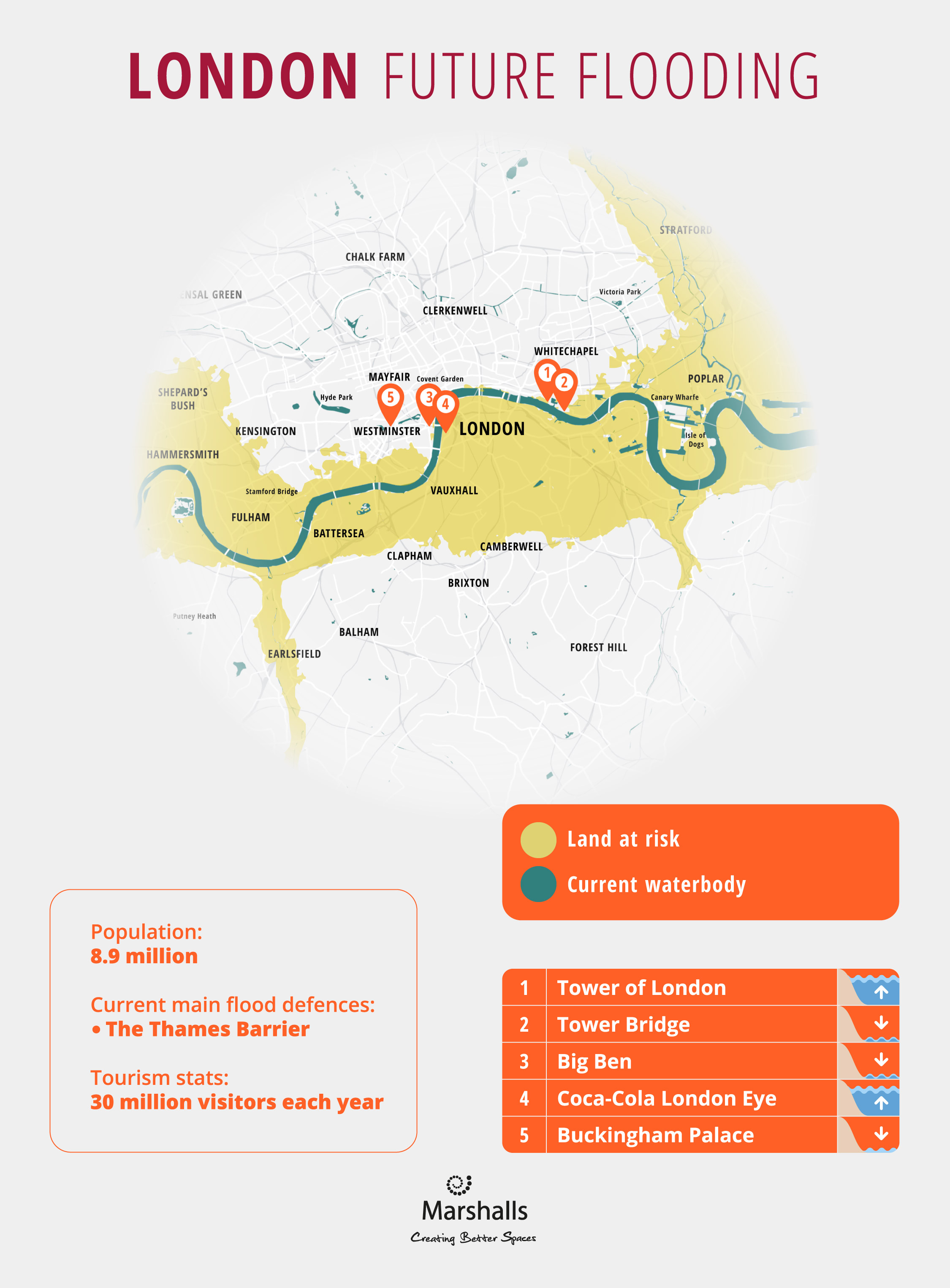
One of the busiest cities in the world, with around 30 million tourists paying a visit each year, London must protect itself from high tides and storm surges making their way up the River Thames from the North Sea. The Thames Barrier helps to prevent any damage and is closed whenever flooding is a risk, before being reopened to allow water to flow back towards the ocean.
With busy tourist attractions such as the London Eye, Big Ben and the Tower of London all situated close to the banks of the Thames, serious flooding could pose a major risk to lives and livelihoods. The River Thames Scheme (RTS) and other initiatives represent significant investment in flood resilience and river management that will play important roles in protecting communities and businesses across the capital in the coming decades.
Flood risk is not limited to rising sea levels or tidal surges. The UK's wettest winter on record in 2023-24 highlighted the growing impact of intense rainfall and surface water flooding across towns and cities. As climate patterns continue to change, urban centres such as London face the challenge of managing both river and coastal flood risk alongside increasing pressure on drainage infrastructure and the built environment.
The above are just a few examples of the challenges facing modern planners in areas located on the coast or close to water. As we can see from the likes of the permeable paving in Shanghai and the pumps and barriers implemented in Miami and Osaka, having access to the right materials is crucial when it comes to preparing your project for any current and future flood risk.
Written By

With 20 years’ experience across infrastructure and highway engineering, Pete Tamblin has delivered projects ranging from small housing developments to complex, multi‑million‑pound schemes.