




Blog
Few people embody the craft, grit and evolution of British bricklaying quite like Ian Hodgkinson. With a career spanning more than 40 years, he has journeyed from apprentice to respected construction figurehead, leaving his mark both on-site and on-screen through BBC’s DIY SOS and Brickies. Recently, Ian visited Marshalls Bricks & Masonry’s Maltby factory, and we caught up with him to explore his impressions of the facilities, the role Marshalls is playing in helping build the future of the trade, and his thoughts on the challenges and opportunities facing today’s construction industry. Drawing on his decades of hands-on experience, site leadership, and public advocacy for the profession, Ian offers an unfiltered look at where bricklaying is heading – and what it will take to inspire and support the next generation.
Q: You’ve spent decades in the industry and seen bricklaying from every angle. What was your impression of the Marshalls factory during your visit?
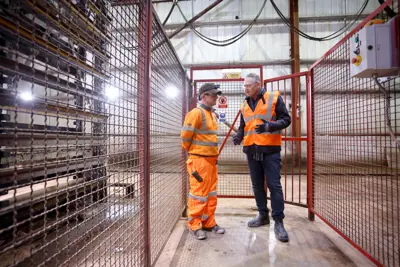
Ian: "Honestly, I was pleasantly surprised. I’ve been around this industry for 40 years, yet I couldn’t believe I hadn’t witnessed a setup like this before. The way aggregate is taken straight from the quarry and moved directly into the manufacturing process is incredibly efficient. The proximity between the raw materials and the production line floored me. From the moment the aggregate comes through, through to the bricks being pressed, and to the moment they leave the factory gates is just seven days – not the weeks or even months you might get elsewhere.
It was great to see Marshalls’ drying process in action too. With Marshalls bricks cured through a controlled drying system – and not requiring the heat- and carbon‑intensive gas‑fired kilns — the energy efficiency is phenomenal. It’s encouraging to see genuine carbon‑reduction measures happening first-hand.
But the thing that struck me most was the environment. I’ve always been very protective of my workforce and volunteers, especially when it comes to dust. This place, though, is pristine. The air feels clean. The whole site is bright, safe and operates seamlessly like a well-oiled machine. For an industry associated with grit and dust, Marshalls has created something close to Utopia.
And then there were the people – passionate, knowledgeable and absolutely committed to what they do. Everyone I met cared – properly cared. They know their craft inside out, they’re enthusiastic about the products and processes, and it gives the whole place this sense of meaning and purpose. That’s not something you see everywhere in this industry."
Q: From a bricklayer's perspective, what should they look for in a high-quality brick?
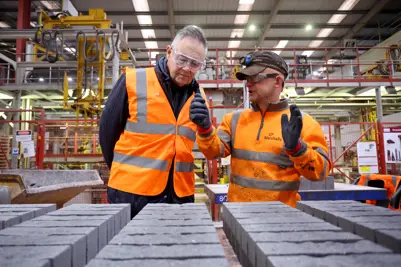
Ian: "One word: consistency. When you pick up a Marshalls brick, it’s the right size every single time. That means your perps line up, your bed joints stay uniform, and your finished work looks crisp and properly “regimental” – just as good bricklaying should.
That level of precision only comes from a high‑accuracy manufacturing process like the one I saw at Marshalls’ Maltby facility. It gives bricklayers confidence that what comes off the pallet is going to perform exactly as it should.
And it’s not just about performance; it’s about appearance too. Whether you’re using one of their tumbled, vintage‑style bricks, or the more modern stock bricks, there’s ranges to suit all regional aesthetics. The best buildings in this country are built from brick – their style need to stand the test of time."
Q: How have you seen the public’s perception of bricklaying and apprenticeships change over your career?
Ian: "It’s changed massively. When I started, trades were often seen as something for people who weren’t academic, which is total nonsense. Bricklaying is tangible: you’re building someone’s home, the place that shapes their lives. People are realising now that the trades offer a real career, not a fallback. You can travel the world, earn good money, or start your own business, like I did. And you don’t leave with £30,000 or £40,000 of student debt."
Q: Despite high interest from young people in the construction industry, there seems to be a "bottleneck" in getting them onto sites. Why is that?
Ian: "At the moment, around 60% of construction students leave the industry after college. Not because they don’t want to work – it’s quite the opposite. Colleges are full to bursting with young people wanting apprenticeships. The issue is at the employer end. Smaller contractors simply can’t afford to carry the wage of someone who isn’t yet fully productive. Tier-one developers need to take more responsibility instead of passing the training burden down the supply chain.
And as for the Apprenticeship Levy, it needs to be more flexible; it should be used not just for education but to subsidise wages so these youngsters can actually get on-site experience."
Q: If tier one contractors are the biggest barrier, where do manufacturers like Marshalls fit in when it comes to supporting the next generation of bricklayers?
Ian: "Manufacturers can’t fix the whole problem on their own – but they can make a real difference to the parts they control. One of the biggest helps is giving colleges access to proper materials. Marshalls donating bricks to training centres is a great example. It sounds simple, but hands on experience with real products is exactly what students need to build confidence.
There’s also a psychological side to it. Your first car, your first record, your first brick – you never forget them. If apprentices start out using good quality bricks, they feel like they’re doing the real thing from day one. That confidence keeps them in the trade.
So, while manufacturers can't guarantee more people getting into bricklayer roles, they can strengthen the pipeline: supporting colleges, improving training environments and showing young people that this is a career worth sticking with."
Q: You achieved a lot in in your life and career – what remains your crowning moment?
Ian: "Meeting the Queen at the opening of the Armed Forces Memorial, which we built, was unbeatable. I remember showing her a photograph and explaining that the stonework was actually hung on a brick structure – she was genuinely interested!
But on a day-to-day level, my pride comes from the people. Whether it’s helping a lad who’d come out of prison find a trade and become "Apprentice of the Year" a year later or managing a chaotic DIY SOS site to support a family in need, it’s about the bond you form with the team to achieve a common goal."
Q: What’s one thing you wish people who are not in the industry knew about bricklaying?
Ian: "A lot of people think bricklaying is just stacking bricks in straight lines, but really it’s much more than that. A building becomes part of someone’s life. Chances are, it’s going to be there for generations. Those walls end up holding memories, arguments, celebrations, childhoods. That’s the bit people outside the trade often miss; we’re creating something that lasts. I live in a 300 year old place myself, and the bricks are still doing their job centuries later. That’s the power of good masonry."
Q: What is your final takeaway for people both entering and already working within the trade?
Ian: "To apprentices or anyone thinking about joining the trade: it’s worth it. You’re building the walls that will hold families’ memories for decades. If you love what you do, you’ll never work a day in your life.
And to those already in the industry – from tier‑one contractors to manufacturers and suppliers – open the doors up. Get people talking. Whether it’s over a pint in the pub after work or a bacon butty in the café at breakfast, let’s start the conversation on the ground about building with materials that are right for the future."
