



Blog
The £5k garden vs the £20k garden – where should you actually spend your money?

Go to Marshalls or explore Close
Looking for something different? View Commercial Landscaping Products

Blog
If you had £5,000 to improve your garden, where would you spend it?
What about £20,000?
It's tempting to assume that the biggest difference between a modest garden makeover and a major transformation is simply the materials you choose.
But it isn't quite that simple.
A successful garden is about how you divide your budget between the things you see and the things you don't.
And whether you're making targeted improvements or investing in a complete redesign, knowing where to spend – and where you can save – can make an enormous difference.
Our garden expert and Product Portfolio Lead Nicole Bennett explains where your money really matters.
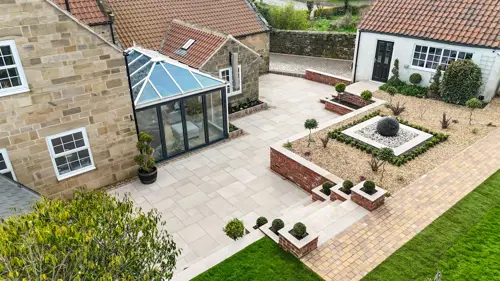
Before talking about budgets, be realistic about what you're trying to achieve.
A smaller budget may be well suited to a DIY garden refresh or minor maintenance jobs. This could include cleaning up an existing paved area, touching up jointing, painting a fence, adding some seating and tackling minor repairs.
For professional landscaping, however, a budget of £5,000 and above is a more realistic starting point, depending on the size and scope of the project. This could allow you to focus on a defined area of the garden, improve an existing patio or introduce new paving as part of a more considered makeover.
A £20,000 budget gives you the potential to think much more broadly: larger paved areas, changes to layout, professional landscaping, different levels, paths, planting, lighting or other features.
But no matter your budget, your plans shouldn't begin with a shopping list. Start with the problem you're trying to solve.
If your existing patio is perfectly usable but the garden feels unloved, you may not need to replace it.
If your patio is badly positioned, too small, poorly drained or no longer suitable for how you use your garden, spending money dressing the space without addressing the underlying problem may be a false economy.
Nobody comes to your house and compliments your sub-base.
But that doesn't make it a sensible place to save money.
If you're having new paving professionally installed, proper excavation, ground preparation, drainage, levels and installation all matter to how the finished patio performs. This is one of the biggest mistakes homeowners can make when comparing quotes.
One quote may appear considerably cheaper because something isn't included or the proposed preparation is different.
Ask what you're actually paying for.
How will the ground be prepared? What sub-base is being used? How are drainage and levels being dealt with? What happens to excavated material and waste?
The finished paving is only as good as the preparation beneath it.
Where you can be clever: the paving itself
Beautiful paving isn't just about the product you choose.
Colour, format, laying pattern and the way the paving complements your home can have just as much impact on the overall result.
A carefully chosen product, professionally installed as part of a coherent garden design, can look far more impressive when it works with the property and the wider landscape.
Before deciding, order samples.
Put them against your brickwork, render, doors and fencing. Look at them in sunlight and shade. See how they look wet and dry.
With a budget of £5,000, it's important to prioritise the improvements that will make the biggest difference to your garden.
Rather than trying to change everything, identify the area that will most improve how you use the space.
Perhaps your existing hard landscaping is sound, but a new paved seating area would make the garden more practical. Maybe replacing tired paving in one defined area, improving access or creating a more attractive transition between the house and garden would have the greatest impact.
The key is to understand what's achievable within your budget, including the cost of materials, labour, preparation and waste removal.
A focused project, professionally planned and installed, will usually be more satisfying than spreading the money so thinly that nothing is properly resolved.
If your plans extend beyond what your budget can comfortably cover, consider completing the work in stages rather than compromising on the essentials.
A larger budget gives you more options – but it also gives you more opportunities to spend money on things you don't really need.
Outdoor kitchens, lighting, water features, expensive furniture and elaborate planting can all look fantastic.
But first ask whether the basic layout works.
Is the patio in the right place? Is it big enough? Can people move comfortably between the house and garden? Are there different areas for eating, relaxing or playing? Does the garden work with the way the sun moves throughout the day?
If the answer is no, that's where your money should go first. Get the structure of the garden right before you start adding the extras.
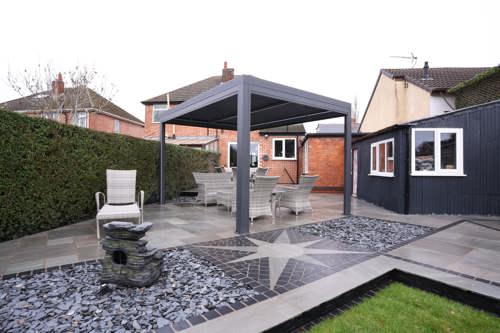
A useful way to prioritise any garden budget is to ask one question:
How difficult would this be to change in three years' time?
Changing cushions, pots or even garden furniture is relatively easy. Changing poorly installed paving, correcting drainage or completely redesigning the levels of a garden is not.
That's why the permanent elements deserve careful thought.
The layout. Ground preparation. Drainage. Installation. The position and size of paved areas. The paving itself.
Get those right first. You can add more planting, furniture and finishing touches over time.
Whether you're investing £5,000, £10,000, £20,000 or more, don't assume the lowest quote represents the best saving.
Ask every landscaper to explain what's included.
Preparation, excavation, drainage, sub-base materials, paving, labour, installation, waste removal and finishing work can all affect the final price.
Ask what isn't included too.
Comparing like for like is far more useful than simply looking at the total at the bottom of the page.
A professional landscaper should also be able to explain where your particular budget is best spent and where alternative choices could reduce costs without compromising the parts of the project that really matter.
Planning your garden project? Start by exploring your paving options. Order free paving samples to compare colours, textures and finishes at home – and when you're ready to bring your plans to life, find a Marshalls Accredited Installer in your area.
Written By

Nicole Bennett is Product Portfolio Lead (Landscaping) at Marshalls, where she leads the strategic development of the company’s landscaping product portfolio across both Commercial and Domestic markets.
Order your free Marshalls Landscaping paving samples and start comparing the colours, textures and finishes that could help bring your new outdoor space to life.

